
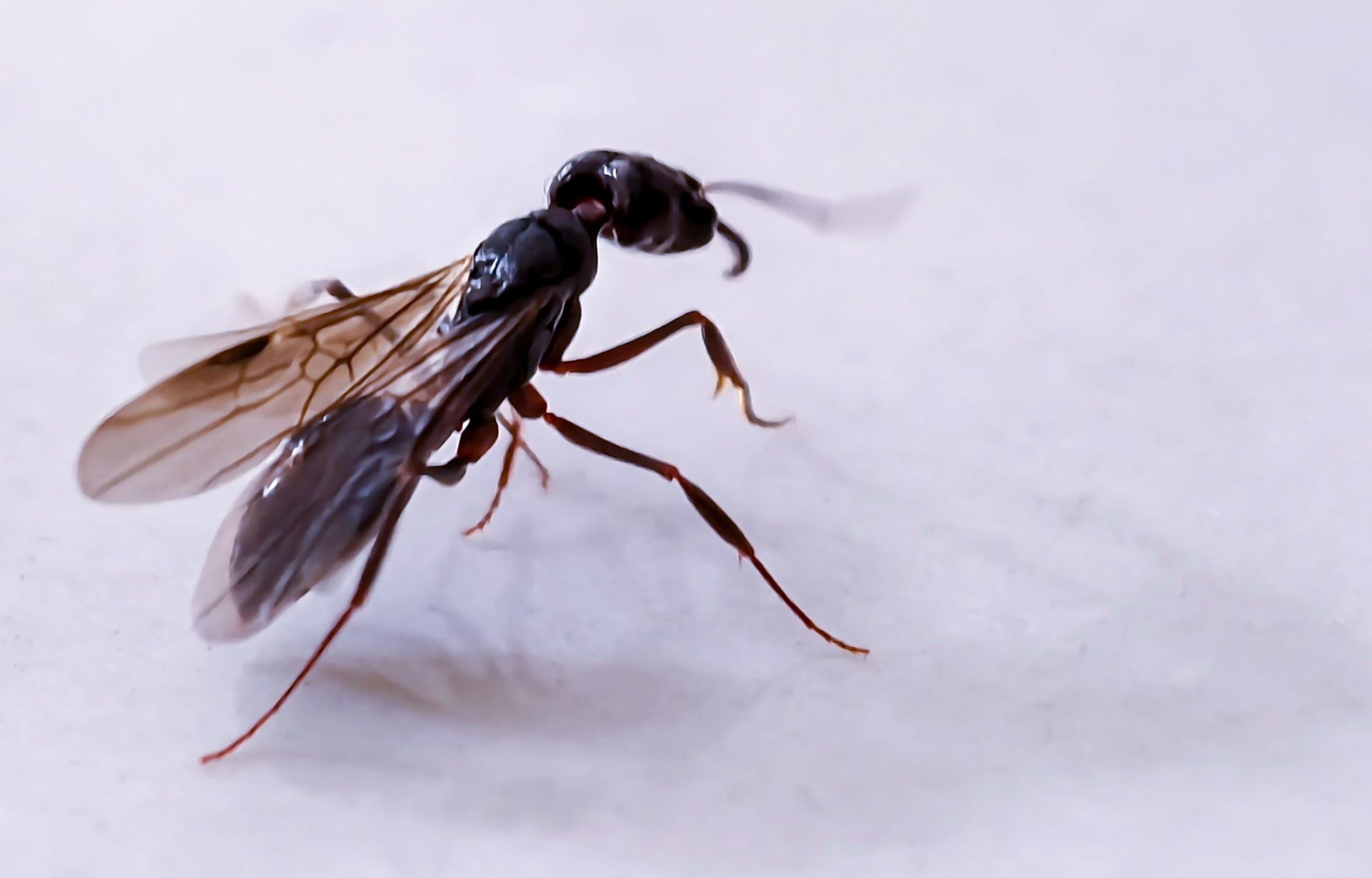
Warm weather across Queensland frequently brings flying termites into the local environment during humid spring conditions. To figure out what you are dealing with, look for winged insects gathering around window frames, porch lights, or structural timbers.
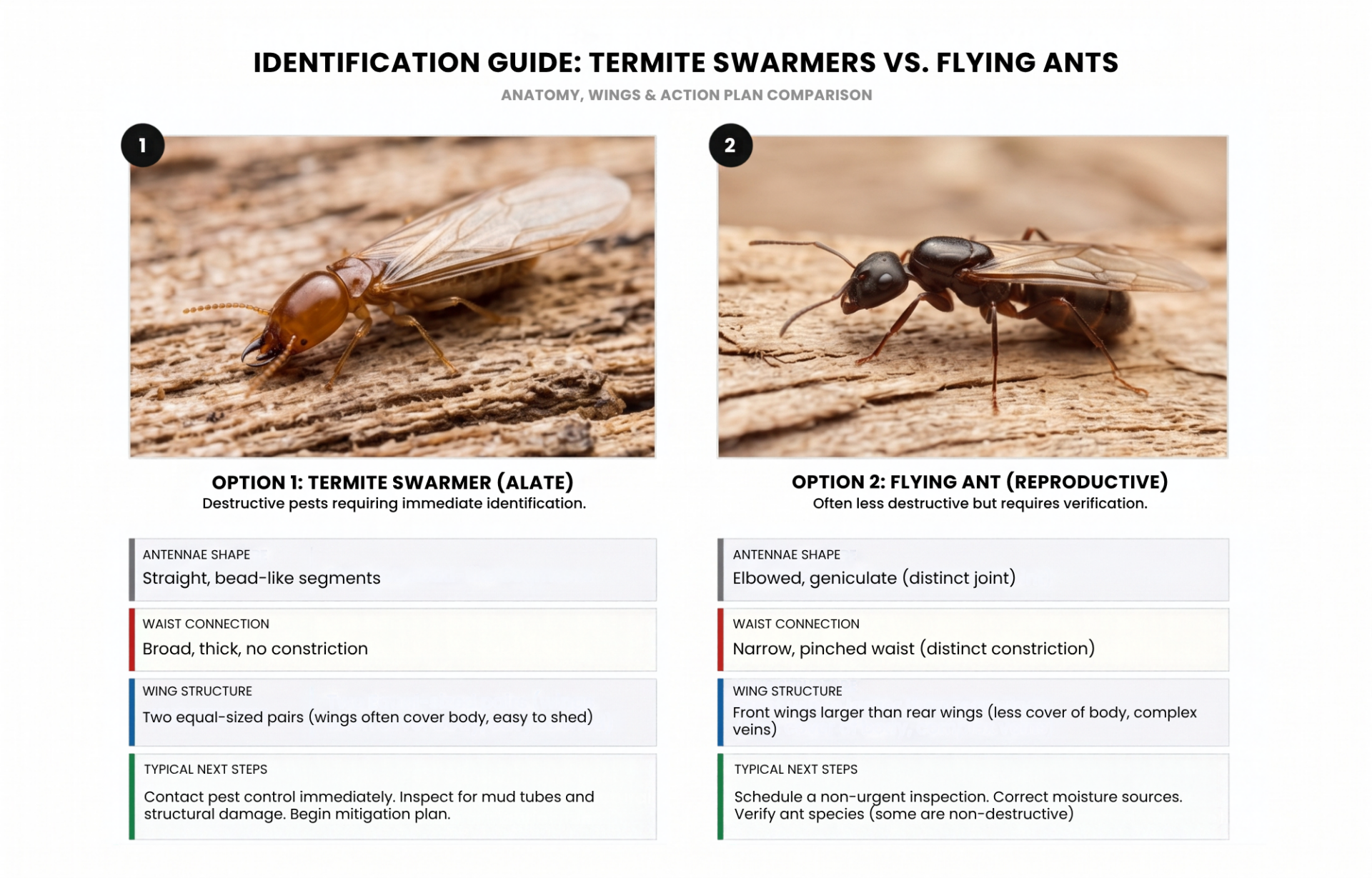
Flying termites and flying ants look almost identical at first glance during a Brisbane spring swarm. Check the antennae, waist, and wings: termite swarmers have straight antennae, broad bodies without a pinched waist, and two pairs of equal-sized wings. Flying ants have elbowed antennae, narrow waists, and unequal wing pairs.
It takes a trained eye to properly assess indoor swarmers. Our family-owned team at Blue Chip Termite & Pest Control routinely assists Brisbane Northside residents whenever seasonal insects show up around their homes. By booking a termite inspection in Brisbane, you keep your core structure safe and gain total clarity on what is happening around your subfloors and garden perimeters.
How to tell flying termites from flying ants in Brisbane
Spotting the differences between termite reproductives and ant species comes down to a few basic anatomical traits. You can check these physical details yourself using a simple checklist:
- Antennae shape: Termite swarmers feature straight, bead-like antennae, while flying ants display distinctly elbowed antennae.
- Waist profile: Termites carry a broad, thick waistline along their body, whereas ants have a distinctly pinched waist.
- Wing structure: Termites have two pairs of wings that match in length and shape, but flying ants feature larger front wings and smaller hind wings.
- Wing shedding: Termite reproductives drop their wings shortly after mating flights, which leaves neat piles of discarded wings near window sills and lights.
Because appearance varies between individual species, you should avoid identifying an insect by its colour alone. Instead, focus on these reliable structural indicators:
| Feature | Flying termites | Flying ants |
| Antennae | Straight and bead-like | Elbowed |
| Waist | Broad, without a narrow waist | Distinctly pinched |
| Wings | Two similar-sized pairs | Forewings larger than hindwings |
| After landing | Wings may be shed | Wing behaviour varies by species |
| Main concern | May indicate nearby termite activity | Usually associated with ant colony activity |
In fact, official Queensland Government information on termite identification notes that definitive species identification often requires professional examination of worker or soldier castes. You can also consult the Australian Museum comparison of ants and termites for extra detail, or look into professional ant treatments if you suspect a local ant colony is swarming nearby.
Why flying termites swarm in Brisbane during spring
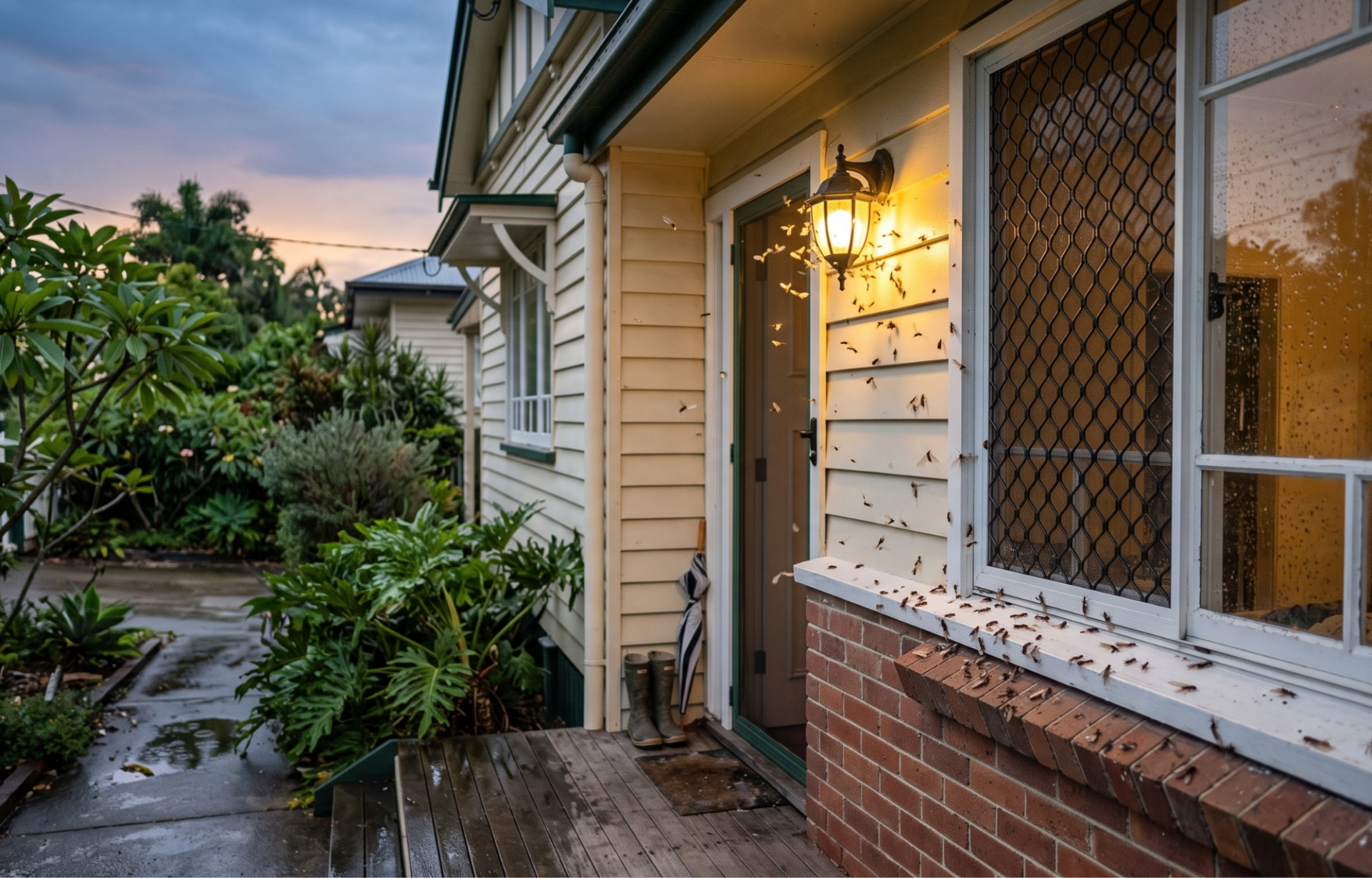
Warm, humid conditions create ideal timing for reproductive flights across Queensland. These swarming events occur when mature colonies release winged reproductives, known as alates, to strike out and build new nests across the surrounding neighbourhood.
Outdoor lights and window sills naturally draw these swarms on warm spring evenings. Because winged reproductives fly directly toward bright lights, they regularly land around glass frames to shed their wings and search for damp timber or moist soil.
What a swarm tells you about the colony
To understand what a swarm actually means for your property, consider where you saw the insects:
- An outdoor swarm confirms that an established nest lives somewhere nearby, but it does not prove your house is infested.
- Insects emerging directly from interior wall joints or skirting boards signal a completely different problem.
- Swarmers emerging from walls, floors or structural timbers can indicate termite activity within or close to the building and should be professionally assessed.
Why Brisbane homes can be worth checking after a swarm
Queensland homes can be exposed to termite risk, particularly where conditions allow concealed access or make termite activity harder to detect. Subfloor areas, garden beds built up against external walls, and other areas with restricted visibility can make inspection and early detection more difficult.
To keep your home protected, the Queensland Building and Construction Commission (QBCC) recommends booking an annual termite inspection. By scheduling regular checks, licensed technicians can assess for signs such as mud channels and other evidence of termite activity.
What to do after spotting flying termites in Brisbane
To handle a sudden spring swarm effectively, follow a simple, structured approach to gather evidence. This helps technicians evaluate the situation quickly during a site visit:
- Collect sample specimens. Place several intact insects or shed wings inside a clean plastic bag or sealable jar.
- Take clear photos. Photograph the insects close-up against a plain white background under bright light.
- Locate emergence points. Inspect window sills, door frames, skirting boards, and light fittings for entry gaps.
- Check for secondary signs. Search surrounding timbers for mud tubes, hollow-sounding wood, bubbling paint, or fine timber dust.
- Keep pathways intact. Leave mud tubes and other suspected termite pathways undisturbed where possible so a technician can assess the signs during the inspection.
- Record swarm details. Note down the exact date, time, weather conditions, and specific room where the insects gathered.
When to book a termite inspection in Brisbane
It takes clear criteria to separate a standard outdoor swarm from a situation that demands immediate technical help. Use this practical decision guide to evaluate your situation:
| What you see | Suggested next step |
| A few winged insects outdoors only | Photograph and monitor for other signs |
| Winged insects repeatedly around windows or doors | Check nearby areas and consider an inspection |
| Discarded wings indoors | Arrange assessment, particularly if activity recurs |
| Swarmers apparently emerging from walls, floors or timber | Arrange a professional termite inspection |
| Swarmers plus mud tubes or damaged timber | Arrange professional assessment promptly |
| Unsure whether they are ants or termites | Obtain a clear identification before choosing treatment |
Repeated sightings inside your living spaces can indicate termite activity within or near the building and warrant a professional assessment. In these cases, booking an inspection allows experienced pest technicians to assess accessible areas and identify signs that may require further investigation.
What a Brisbane termite inspection should check
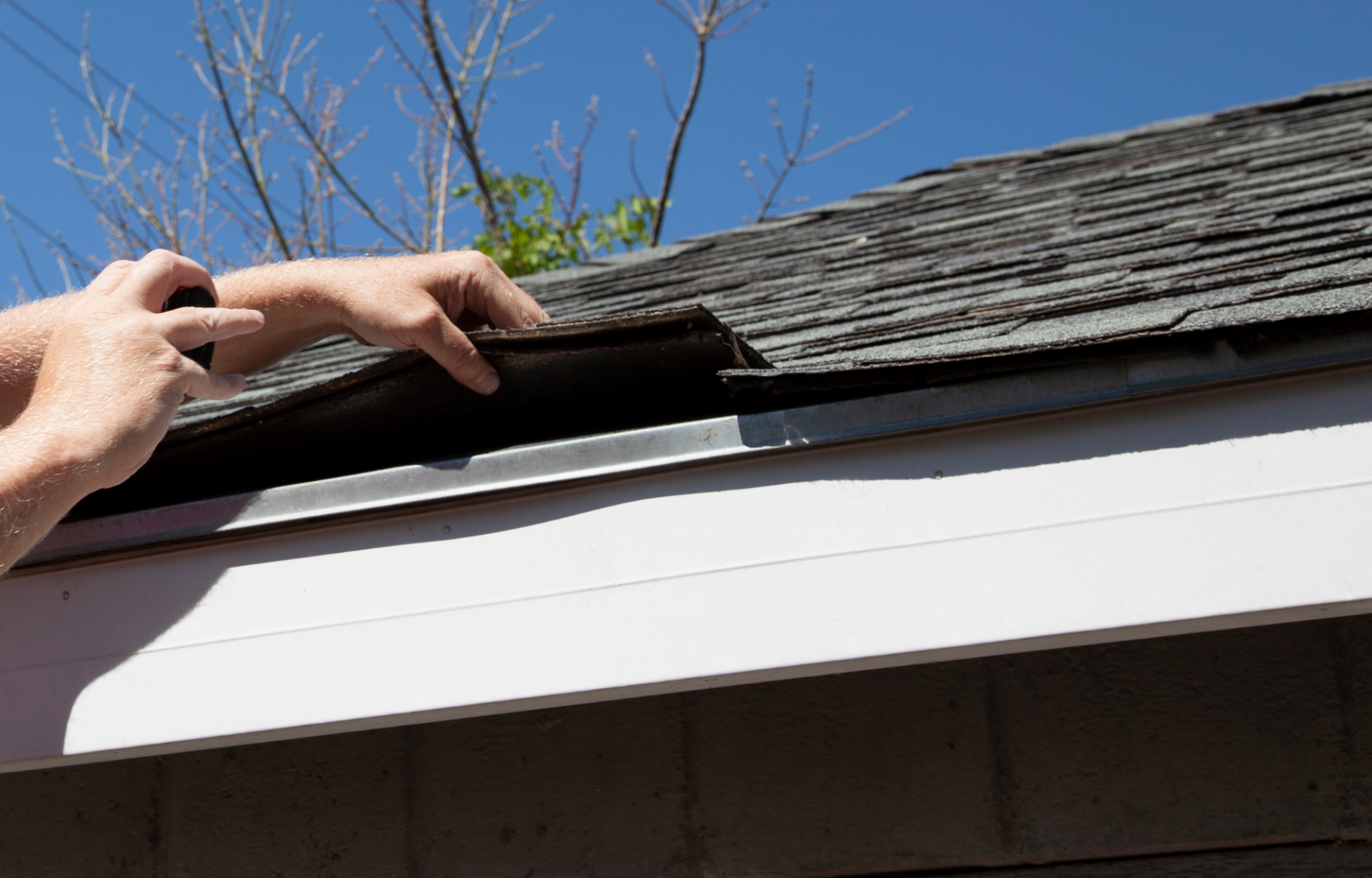
A thorough property assessment goes far beyond the living room where you first noticed insects. Qualified technicians systematically evaluate all accessible timbers, wall cavities, subfloors, and roof voids using specialised diagnostic equipment.
According to the Australian Museum termite identification guide, biological habits heavily influence where termites hide inside structural timber. Because of this, technicians may use tools such as moisture meters and thermal imaging cameras to help identify areas that warrant closer investigation.
Areas around the home that can provide clues
Technicians inspect external wall perimeters, fence lines, retaining walls, and tree stumps for signs of active nesting. Subfloor spaces and weep holes also receive close attention during field checks.
Inside the home, primary evaluation zones include roof voids, door frames, window reveals, and skirting boards. Finding shelter tubes or moisture buildup in these locations helps pinpoint concealed entry paths.
Moisture, timber and concealed access points
Plumbing leaks and poor drainage can create damp conditions that may increase the likelihood of termite activity in susceptible areas. Damp timber structures close to soil or other concealed access points can also make termite activity harder to detect.
To protect your property long-term, maintain clear drainage away from external walls and install proven termite treatments and barriers along vulnerable perimeter zones.
Termite treatments and barriers after a confirmed infestation
Managing active termites requires choosing a strategy tailored to your property’s building layout and the specific insect species involved. Licensed operators create customised management plans after completing a full visual assessment.
Subterranean termite activity
Queensland homes can encounter subterranean species such as Coptotermes and Schedorhinotermes. Depending on the termite species, property and extent of activity, a management plan may include targeted treatments, soil barriers or baiting systems.
Existing termite management systems
Landscaping changes, garden additions, and patio extensions can disrupt existing soil barriers or physical perimeter systems. Because of this, you should ensure any new construction does not bridge management zones or cover up critical inspection points.
Commercial and sensitive environments
Commercial properties, childcare centres, schools, and medical practices require carefully planned treatment schedules. Technicians can design lower-disruption control programs with treatment methods selected to suit the site, its occupants and applicable safety requirements.
What Brisbane homeowners should do after a spring termite swarm
Accurately identifying winged insects can help you decide when professional assessment is appropriate. Keeping clear records and leaving suspected termite pathways undisturbed allows technicians to assess the available evidence during their visit.
If you have found winged insects inside your home or want to confirm swarm signs, reach out to our team at Blue Chip Termite & Pest Control. Elizabeth and Jeremy Bryce offer clear, detailed assessments across Brisbane Northside so you can book a termite inspection with complete confidence.
Frequently Asked Questions (FAQ)
How can I tell flying termites from flying ants?
Termite alates feature straight antennae, broad waists without a narrow pinch, and two pairs of equal-length wings. Flying ants display elbowed antennae, pinched waists, and front wings that are larger than their hind wings. Termites also shed their wings in uniform piles near light sources shortly after landing.
Are flying termites common in Brisbane during spring?
Spring weather across Brisbane brings warm, humid conditions that encourage mature termite colonies to release reproductive alates. These flight events peak during humid afternoons and evenings following rain. Seasonal swarms allow established nests to disperse new reproductives across local residential neighbourhoods.
Do flying termites mean my house has termites?
An outdoor swarm confirms that a termite colony exists nearby, but it does not prove your house is infested. However, finding winged insects inside living rooms, emerging from walls, or dropping wings near skirting boards indicates potential indoor activity that requires a professional assessment.
Why do flying termites appear around windows and lights?
Reproductive termites naturally fly toward bright light sources during evening swarms. Fluorescent lights, porch fittings, and illuminated window frames attract swarming alates. The insects gather near glass surfaces before landing, shedding their wings, and searching for moist timber or damp soil.
What should I do if I find flying termites inside my house?
Collect a few specimens in a sealable jar, photograph the insects clearly, and note where they emerge. Avoid spraying household chemicals directly onto mud channels or entry holes. Instead, schedule a professional termite inspection if insects appear repeatedly indoors or near structural timbers.
Should I spray flying termites when I see them?
Aerosol sprays kill visible flying insects, but they fail to reach the main underground colony. Spraying active termite areas can disturb the activity and make it harder for a technician to assess the original entry points and pathways. Collecting specimens for a technician can assist with identification and assessment.
How often should Brisbane homes have termite inspections?
The Queensland Building and Construction Commission recommends annual professional termite inspections for all residential properties. More frequent inspections may be recommended for higher-risk properties or where required by the existing termite management system.
Can Blue Chip identify flying termites and check my home?
Blue Chip Termite & Pest Control provides technical species identification and thorough property inspections across Brisbane. Licensed technicians examine roof spaces, subfloors, interior walls, and exterior garden perimeters to identify active termites and recommend site-specific management options.